

Noelia Ricci
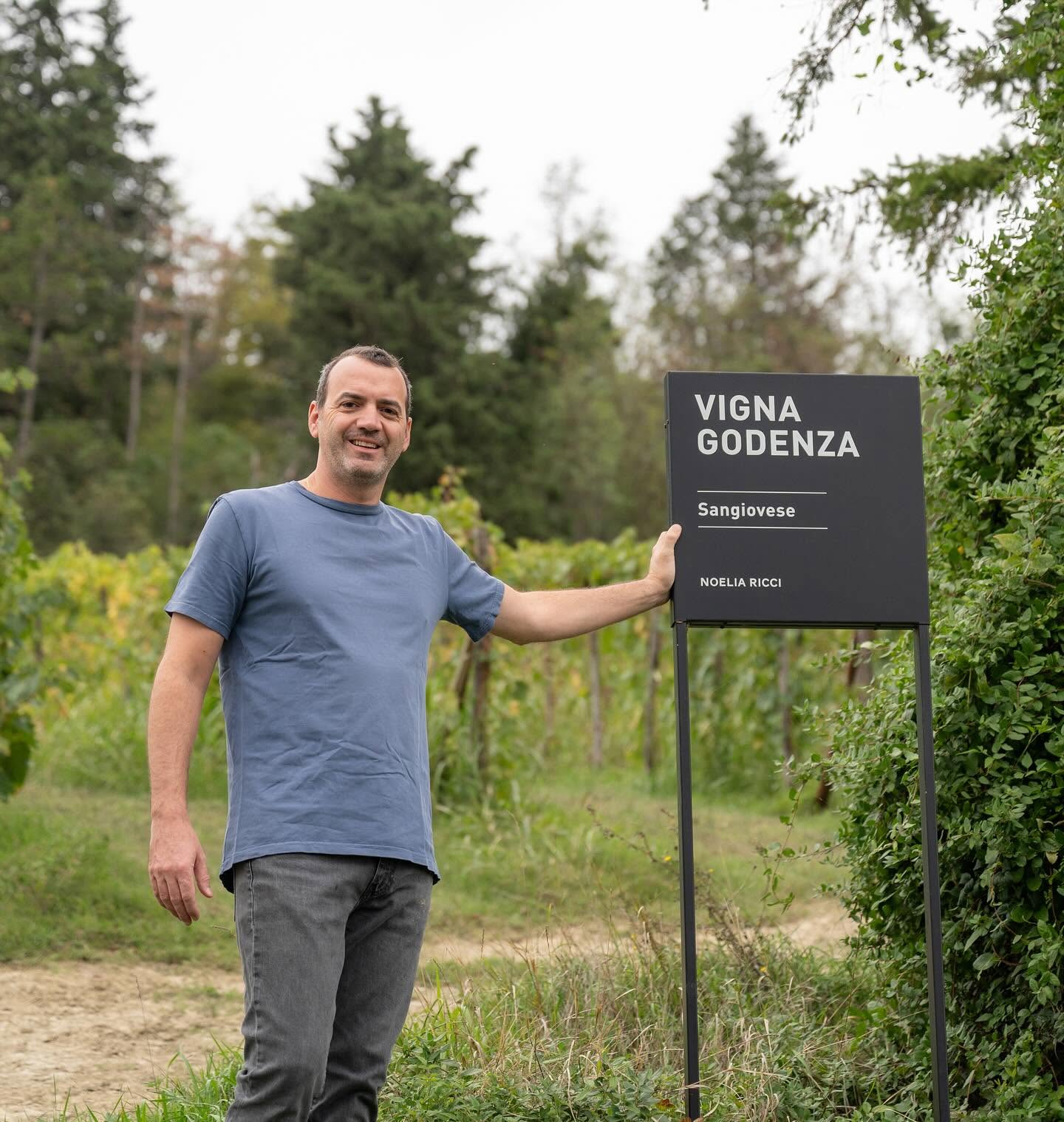
In the hills of Predappio, in the Romagna countryside of Emilia-Romagna, Noelia Ricci crafts some of Italy’s most compelling expressions of Sangiovese. The winery sits within Tenuta Pandolfa, a historic estate whose villa, built between 1731 and 1763, commands the valley of the Rabbi stream. Commander Giuseppe Ricci purchased the property in 1941, and it was his daughter Noelia—the visionary the project is named for—who first recognized the land’s potential and planted vines in the 1970s.
Predappio is one of the most storied terroirs in all of Romagna. Romagna Sangiovese earned DOC status in 1967—the first appellation in Emilia-Romagna—and in 2011 was organized into 16 official subzones, each with its own soils and elevations. Among them, Predappio holds a place of special prominence as the most historic of Romagna’s terroirs, so revered for the depth and structure of its wines that locals are fond of saying Predappio is to Sangiovese what Barolo is to Nebbiolo. In a region increasingly celebrated by critics, Predappio and neighboring Modigliana consistently stand out for the number of quality wines and the clarity of their terroir character.
What sets the zone apart lies beneath the vines. Strung along the banks of the Rabbi River in the foothills of the Apennines, Predappio’s soils are of Pliocene origin with a limestone-clay base, giving way to sand and sandstone intrusions, and, at the center of the valley, the emergence of spungone. This ancient, fossil-rich sandstone—embedded with intact shells and the remains of a prehistoric seabed—lends the wines a remarkable minerality and saline character that has become the signature of great Predappio Sangiovese. The climate helps, too: though continental in character, the valley is swept by drying breezes off the Adriatic some 50 kilometers away, keeping the vineyards healthy and the wines fresh.
Today the estate is led by her grandson Marco Cirese, who launched the modern Noelia Ricci project in 2013, focusing on a rare nine-hectare “château” of prime hillside vineyards. Planted exclusively to the native Sangiovese and Trebbiano and farmed organically, the vineyards rise from roughly 200 to 340 meters on soils of spungone, sandstone, and calcareous marls threaded with ochre clay and sand. The winemaking is deliberately hands-off—indigenous yeasts, controlled maceration, and minimal intervention to favor fine structure, personality, and drinkability.