

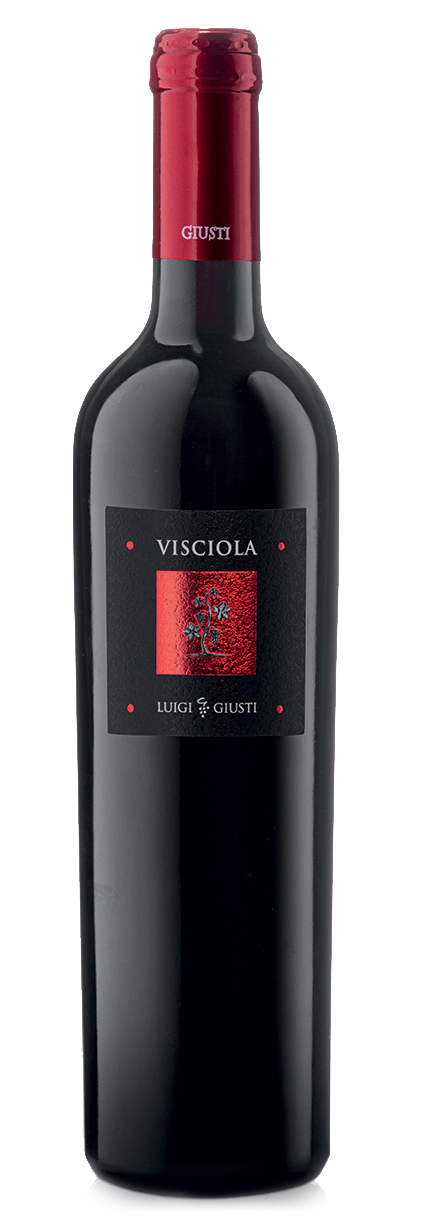
Visciola
Visciole are wild sour cherries, and in the Marche people have been making wine from them for centuries — a farmhouse tradition, made at home, one demijohn at a time.
Piergiovanni Giusti still does it the long way. Two varieties of cherry, picked slightly over-ripe, half of them dried in the sun for forty days. The fruit ferments in glass demijohns set outdoors until it gives up a dark syrup. That syrup and the spent cherries are refermented with must from the family’s Lacrima, the floral red growing a few rows away, then passed over wine from the previous vintage. Nothing is ever pressed. Two lots of different sweetness are married at bottling.
Deep red shot through with violet. Morello and black cherry, sweet but with a thread of sourness running underneath that keeps it honest. Serve it cool, around 55°F — with chocolate, with a tart, or with nothing at all.
Region: Marche | Zone: Montignano, Senigallia (Ancona); cellar at Castelferretti
Type: Traditional Marche sour cherry wine (vino di visciole), sweet
Composition: Wild sour cherries (visciole) and Lacrima di Morro d’Alba
