

Our producers’ wines reflect the authenticity and excellence that comes from generations of experience in the vineyard and in the cellar, together with an unwavering focus on quality.

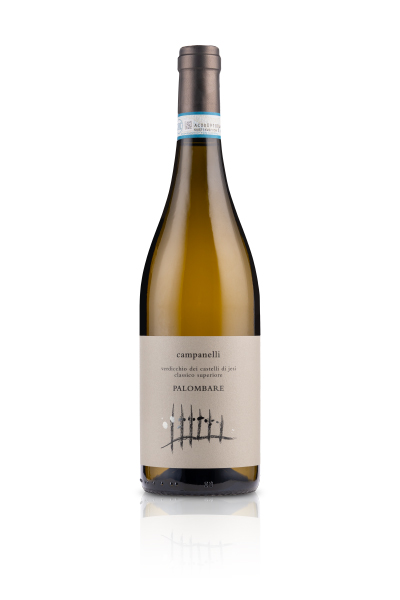
Verdicchio Dei Castelli Di Jesi Classico Superiore “Palombare”

This is where it began. Palombare is Francesco Campanelli’s first wine — a single-vineyard Verdicchio from the Sasso district of Serra San Quirico, the westernmost, highest edge of the Castelli di Jesi, where the Apennines cool the air and sharpen the swing between day and night. The vines here are old, planted in 1955 and 1991, rooted in clay, limestone and sandy marl. Grapes are hand-picked, whole-cluster pressed and left to settle before fermenting on native yeasts; the wine then rests for months in cement and steel, stirred regularly on its lees. What comes out is floral and mineral, almond and straw and white fruit on the nose, with a saline drive that keeps pulling you back to the glass. A wine of a single place, made with full respect for the land that shaped it.

Appellation: Verdicchio dei Castelli di Jesi D.O.C. Classico Superiore.

Type: White, dry wine.

Varietal: 100% Verdicchio.

Wine Details:

Tasting Notes:
Color:  Brilliant straw yellow with greenish highlights
Bouquet: Floral and herbaceous notes, mineral nuances, lemon, almond, straw, white fruit.
Palate: Floral, herbaceous, almond and lemon notes, mineral hints.
Alcohol: 13.5% (varies with vintage).
Serving temperature: 10/12° C (50-54º F).
Food pairing: Serve as an aperitivo, with fresh fish and sushi, seafood, light primi piatti.

Vinyard Notes:
Vineyard:Single cru - Palombare, in Sasso di Serra San Quirico — westernmost edge of the appellation, closest to the Apennines.
Elevation: 330-370 meters.
Vine age:Two contiguous parcels, planted 1955 and 1991, exposition East / South-East.
Varieties of the vineyard: The vines planted are 90% old clones of Verdicchio and for the remaining 10% a mix of Trebbiano and Malvasia, with some plants also from Montepulciano.
Soil: Medium mixture composed of clay and limestone, with presence of sandy interlayers.

Winemaking Notes:
Harvest: Hand-picked in boxes.
Vinification: Soft pressing of the whole bunches with extraction of the flower must only, static decantation, fermentation with indigenous yeasts.
Aging:~7 months in cement and steel tanks on the fine lees with frequent bâtonnage, followed by at least 9 months of bottle aging; no oak.