

Our producers’ wines reflect the authenticity and excellence that comes from generations of experience in the vineyard and in the cellar, together with an unwavering focus on quality.

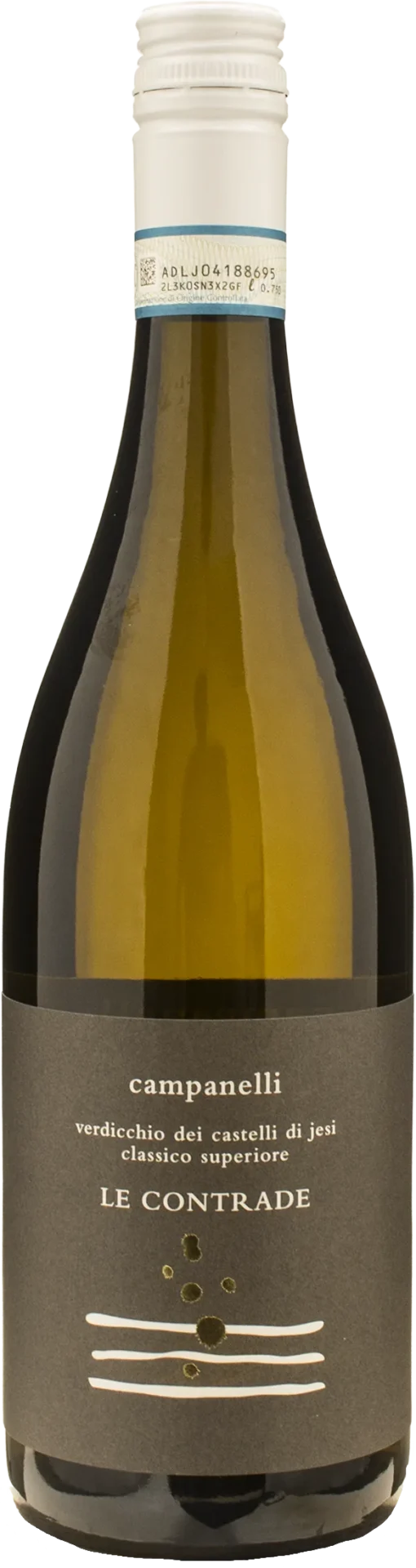
Verdicchio dei Castelli di Jesi Classico Superiore “Le Contrade”

Meet Francesco Campanelli — one of Italy’s most exciting new winemakers, doing for Verdicchio what the Piedmontese did for Nebbiolo: making single-village cru wines that show off the vineyard, not just the grape. Le Contrade (“The Districts”) is his brilliant introduction to the project — a “greatest hits” cuvée blending his headline vineyard Cerrete with balances from his stars Palombare, San Michele, San Nicolò, and Follonica.

Hand-picked in crates, whole-bunch pressed, fermented with native yeasts, and aged on the lees — this is Verdicchio the way it should be made. Expect crisp citrus, cut-grass freshness, salty almond, and the unmistakable Marche mineral snap. Named Marche’s best value white by Gambero Rosso — and it shows.

Appellation: Verdicchio dei Castelli di Jesi D.O.C. Classico Superiore.

Type: White, dry wine.

Varietal: 100% Verdicchio.

Wine Details:

Tasting Notes:
Color: Straw yellow with subtle greenish reflections.
Bouquet: Fresh and expressive with notes of white flowers, elderflower, citrus (lemon, grapefruit), cut grass, and green apple. Signature Verdicchio hints of bitter almond and flint mineral emerge with air.
Palate: Crisp and vibrant with fresh acidity, pronounced salinity, and a moderate creamy texture from lees aging. Balanced and versatile, with a signature bitter-almond finish and mineral length characteristic of the Castelli di Jesi terroir.
Alcohol: 13.5% (varies with vintage).
Serving temperature: 12/14° C (54-57º F).
Food Pairing:   Fish appetizers, seafood pasta (non-tomato), white meats, fish tartare/carpaccio, soft cheeses.

Vinyard Notes:
Vineyard:Single-cru parcels blended: San Nicolò (San Paolo di Jesi), San Michele (Cupramontana), Palombare (Serra San Quirico), Cerrete (San Paolo di Jesi)
Elevation: Ranging from 160 meters (San Nicolò, closest to the Adriatic) to over 370 meters in the higher cru sites
Soil Composition: Clay and limestone matrix with variable sandy components; subsoils range from marl to sandstone  

Winemaking Notes:
Harvest: Hand-picked in boxes.
Vinification:Soft pressing of whole bunches with removal of only the free-run must, static decantation, fermentation with indigenous yeasts.
Aging: Aging on the fine lees in concrete for at least 3 months.