

Our producers’ wines reflect the authenticity and excellence that comes from generations of experience in the vineyard and in the cellar, together with an unwavering focus on quality.

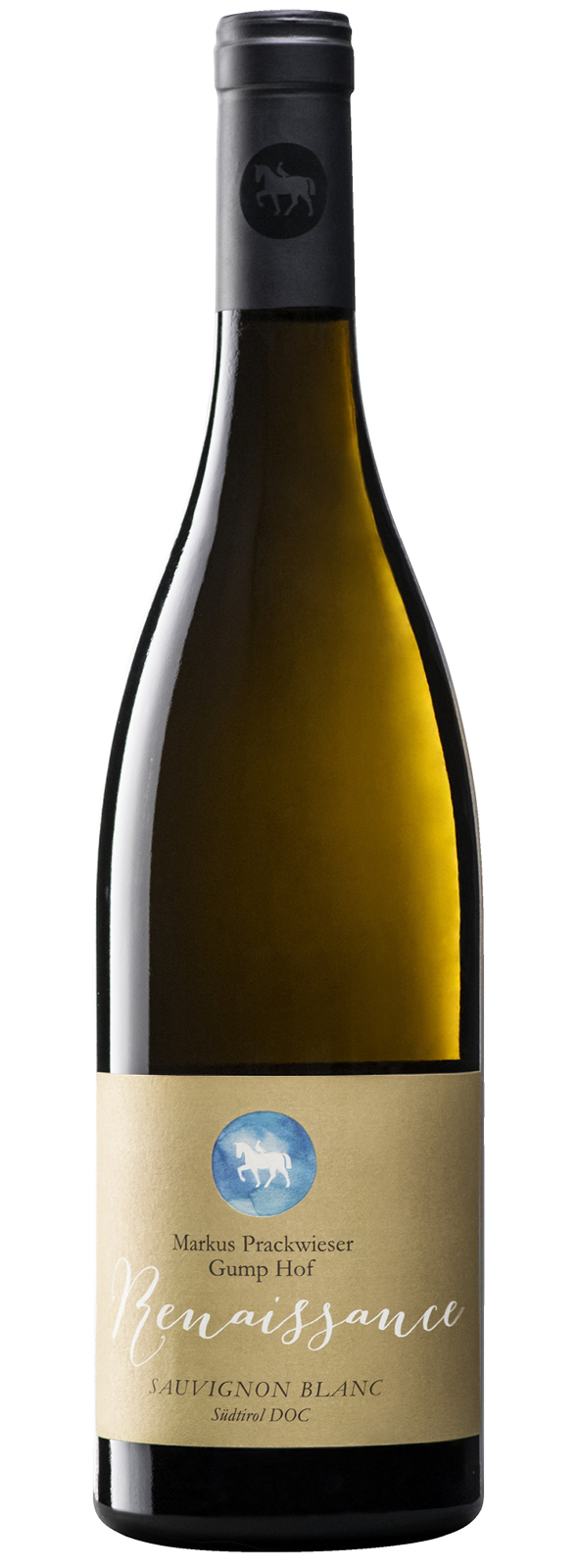
Sauvignon Blanc Riserva Renaissance

From the estate’s oldest, steepest terraces beneath Presule Castle, Markus Prackwieser crafts “Renaissance” — a Sauvignon of rare patience, raised slowly on its lees and released only when ready. Gone is the simple varietal flash; in its place, profound depth: ripe white peach, gooseberry, and candied citrus woven with Alpine herbs, smoke, flint, and honeyed stone. Concentrated, textured, and humming with Dolomite tension, it uncoils across the palate to a saline finish of astonishing length. 

Appellation: Südtirol DOC

Type: White, dry

Varietal: Sauvignon Blanc

Wine Details:

Tasting Notes:
Color: Brilliant straw-yellow with light yellow-green highlights.
Bouquet: Sage, citrus, elderflower, alpine herbs, a touch of white asparagus, gooseberry, and wet stone.
Palate: Savory, fresh, and juicy. Ripe yellow orchard fruit, notes of grapefruit and tropical fruit, crisp acidity, and salty minerality on the long finish.
Alcohol: 14.5%.
Total Acid: 6.5 g/l.
Residual Sugar: 0.9 g/l.
Serving Temperature: Chilled 10-12° C (50-54° F).
Pairing: Lobster and rich shellfish, turbot and other fine fish in sauce, roast poultry, veal, risotto with mountain herbs, mature Alpine cheeses.

Vinyard Notes:
Location: South edge of the Eisacktal (Isarco Valley) at the foot of the Sciliar massif.  A strict selection from the estate's oldest, best-exposed terraced parcels around the Gumphof farmstead in Novale di Presule, beneath Presule Castle,
Altitude: 500-550 meters (1,640-1,800 feet) a.s.l.
Soil: Calcareous moraines on solid quartz porphyry.
Slope: 60–70%
Training: Pergola and trellis
Density: 4,500–7,500 vines/ha.
Yield: 50 hl/ha.

Winemaking Notes:
Harvest: End-of-September.
Vinification: short maceration followed by gentle pressing and fermentation in wooden cask (tonneau).
Aging: maturation for 12 months on the gross lees in wooden casks (tonneau) and afterwards for one year in steel tanks on the fine lees.