

Cantina Francesco Cadinu
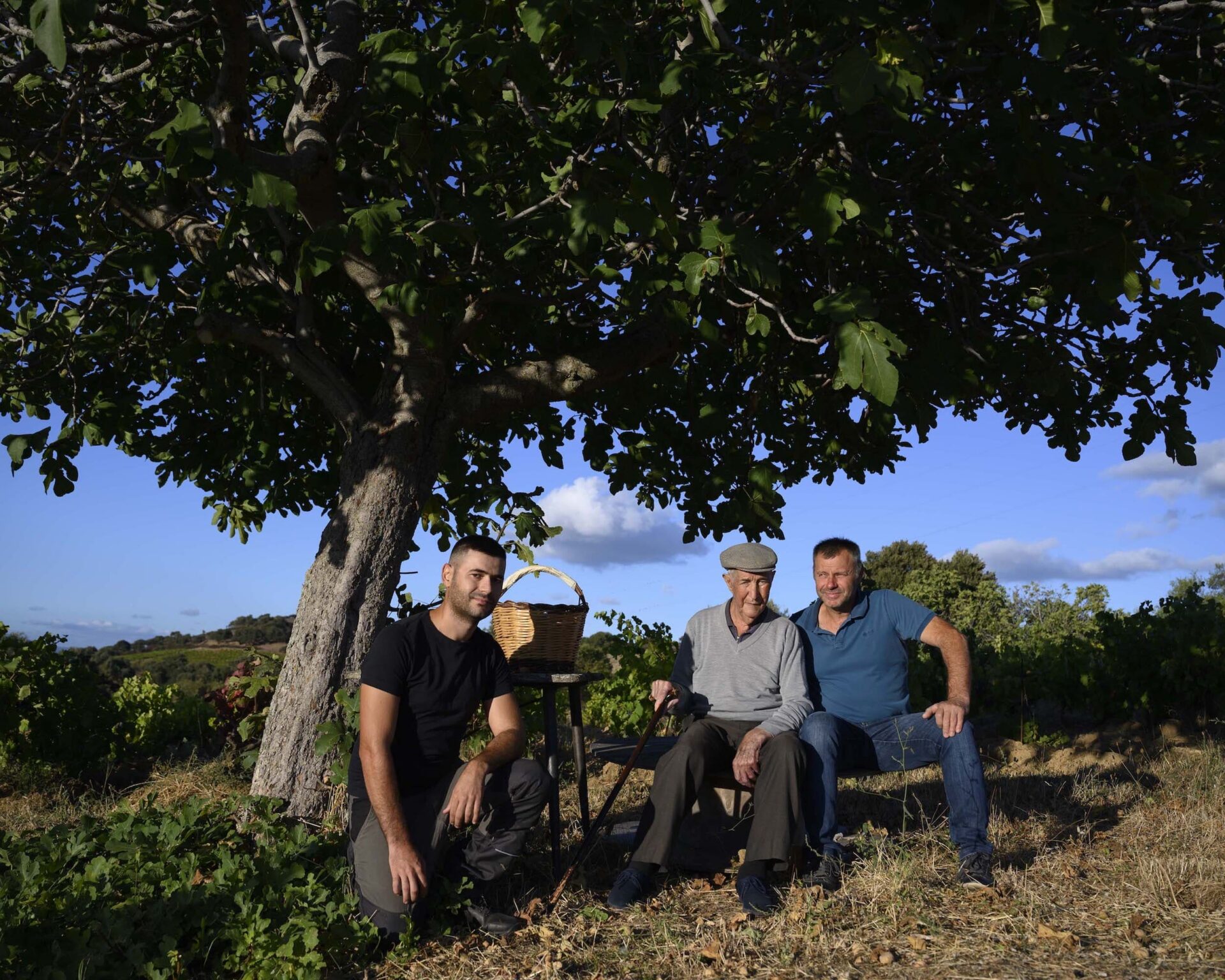
In the granite highlands of Barbagia, in the village of Mamoiada at the heart of Sardinia’s Cannonau country, Francesco and Simonetta Cadinu are custodians of a vineyard story that predates their winery by decades. The family’s viticultural roots trace back to the 1950s, when an ancestor known simply as “tziu Simone” — Uncle Simone — learned the vines from his father-in-law and acquired an old parcel in a place called Fittiloghe. That same plot, now planted with vines well over a century old, still anchors the estate today. Francesco and Simonetta formalized the winery in 2015, turning five generations of family winegrowing into a small, focused, single-purpose project: Cannonau, grown the way Mamoiada has always grown it.
The eight hectares are scattered across eight separate parcels around the village, on the loose, slightly acidic decomposed granite that defines this corner of Nuoro province, at altitudes climbing toward 700 meters. The vines are trained alberello, the traditional Sardinian bush-vine method, some worked by hand and ox rather than machine. In the cellar the approach is equally hands-off: spontaneous fermentation with native yeasts, small wooden vats with no temperature control, and aging in barrel — chestnut for the oldest-vine wines, a distinctly Sardinian touch few producers still use.
Two wines anchor the estate’s Cannonau di Sardegna: Perdas Longas, from roughly 70-year-old alberello vines in the Elisi and Perdas Longas crus (named for the ancient standing stones found in the vineyard), aged 12–15 months in wood — a wine that has drawn a run of serious critical attention, including a Gambero Rosso Tre Bicchieri for the 2023 vintage and gold at the Grenaches du Monde competition. And Ghirarda Fittiloghe, the estate’s most intense expression, from the 120-year-old vines of that original family parcel, hand-harvested in October, naturally fermented, and aged in small chestnut barrels — a low-yield, high-altitude Cannonau built for structure and age.